Cowboys Prediction Lays Out ‘Exit Strategy’ for $240 Million QB Dak Prescott
Frisco, TX – September 26, 2025
Despite a lack of postseason glory over the past two decades, the Dallas Cowboys have enjoyed remarkable stability at the most crucial position on the field. Since 2007, the team has relied solely on Tony Romo or Dak Prescott to start the season at quarterback—a streak spanning 19 years, barring any injury setbacks. Within the NFC East, this consistency stands out, with the New York Giants (3 starters), Philadelphia Eagles (7), and Washington Commanders (10) cycling through far more opening-day quarterbacks.
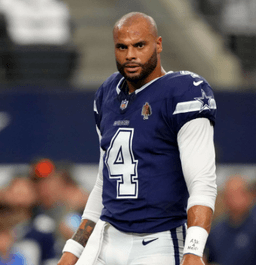
Yet, the time may be nearing for the Cowboys to hand the reins to a new quarterback. After a dismal 5-12 record in 2024 and a shaky 1-2 start in 2025, coupled with what might be the NFL’s weakest defense, Dallas’ path to contention looks bleak. This situation opens the door for a potential parting with Prescott, whose four-year, $240 million contract—complete with a no-trade clause—could allow an exit strategy as early as after the 2026 season, according to Spotrac’s Michael Ginnitti.
Ginnitti detailed the contract breakdown on September 21: “All $40M of 2026 salary is fully guaranteed, and all $45M of 2027 compensation locks in next March. $17M of 2028 salary then fully guarantees in March of 2027, accounting for a nearly 73% guarantee rate on remaining compensation. With that said, it’s safe to assume that an extension—or exit strategy—could begin to be discussed in March 2027.”
Astonishingly, the Cowboys’ quarterback consistency has come without leveraging first-round picks. Neither Romo (undrafted) nor Prescott (fourth-round pick, No. 135 overall, 2016) were top selections, giving Dallas a rare edge to invest early picks elsewhere. Yet, they’ve failed to capitalize on this advantage. Contrast that with the Chicago Bears, who’ve drafted three first-round quarterbacks in the last decade, and the disparity is stark.
The last time the Cowboys selected a quarterback in the first round was 1989, when they chose Troy Aikman from UCLA with the No. 1 overall pick. Aikman, a Pro Football Hall of Famer, led the team to three Super Bowl titles and is regarded as one of the NFL’s all-time greats. Since then, within the NFC East, the Eagles have taken two first-round QBs, the Giants three, and the Commanders an astonishing six. Currently, the Commanders are starting their latest first-rounder, Jayden Daniels (No. 2 overall, 2024), while the Giants prepare Jaxson Dart (No. 25 overall, 2025) for his debut in Week 4.
For the Cowboys, the lack of a first-round QB since Aikman—longest among all 32 NFL teams—underscores a unique strategy that’s brought stability but not championships. As Prescott’s tenure nears a potential crossroads, the team must weigh whether to extend his contract or plot an exit, all while their defense flounders and the pressure mounts
May You Like

He Didn’t Post a Thing. But What Cowboys QB Dak Prescott Did in Washington State Says Everything

Cowboys Owner Jerry Jones Sparks Nationwide Debate After Announcing Ban on LGBT Merchandise at AT&T Stadium